Every successful business evolves over time. While technology often drives innovation, lasting organizational change depends on something even more important: people.
Few examples illustrate this better than Microsoft’s cultural transformation. Once known for its highly competitive internal environment, the company underwent a significant shift in leadership philosophy, workplace culture, and employee development. Rather than focusing solely on products and performance, Microsoft began placing greater emphasis on empathy, collaboration, continuous learning, and empowering employees.
The transformation demonstrated that even one of the world’s largest technology companies could reinvent itself by putting people at the center of its strategy.
Today, Microsoft’s journey is frequently discussed as an example of how organizational culture can influence innovation, employee engagement, and long-term business success.
Why Organizational Culture Matters
Culture influences every aspect of a workplace.
It shapes:
- How employees collaborate
- How leaders communicate
- How decisions are made
- How teams respond to change
- How innovation develops
- How employees experience their work
Technology, processes, and business strategies can all be copied by competitors. Workplace culture is much harder to replicate.
Organizations with strong cultures often adapt more effectively to changing markets because employees feel connected to a shared purpose.
Microsoft’s transformation highlights how culture can become a strategic advantage rather than simply an internal initiative.
A Company Ready for Change

By the early 2010s, Microsoft remained one of the world’s most influential technology companies, but it faced increasing competition in rapidly changing markets.
Technology was evolving quickly.
Cloud computing, mobile devices, and new software platforms were reshaping customer expectations.
Internally, many observers described Microsoft’s culture as highly competitive, with teams sometimes operating in silos and prioritizing individual success over collaboration.
While competition can encourage strong performance, excessive internal rivalry may also limit knowledge sharing, innovation, and cross-functional teamwork.
Recognizing these challenges, Microsoft began a broader cultural transformation focused on creating an organization that could learn, adapt, and collaborate more effectively.
Leadership That Set a New Direction
A major turning point came with new leadership that emphasized a different vision for the company.
Rather than focusing only on achieving results, leadership placed greater importance on how those results were achieved.
Several principles became central to the transformation:
- Empathy
- Collaboration
- Curiosity
- Continuous learning
- Customer focus
- Employee empowerment
This represented a shift from a culture centered primarily on competition toward one built around shared success.
Leadership recognized that long-term innovation depends on people feeling encouraged to learn, experiment, and work together.
From Knowing Everything to Learning Everything
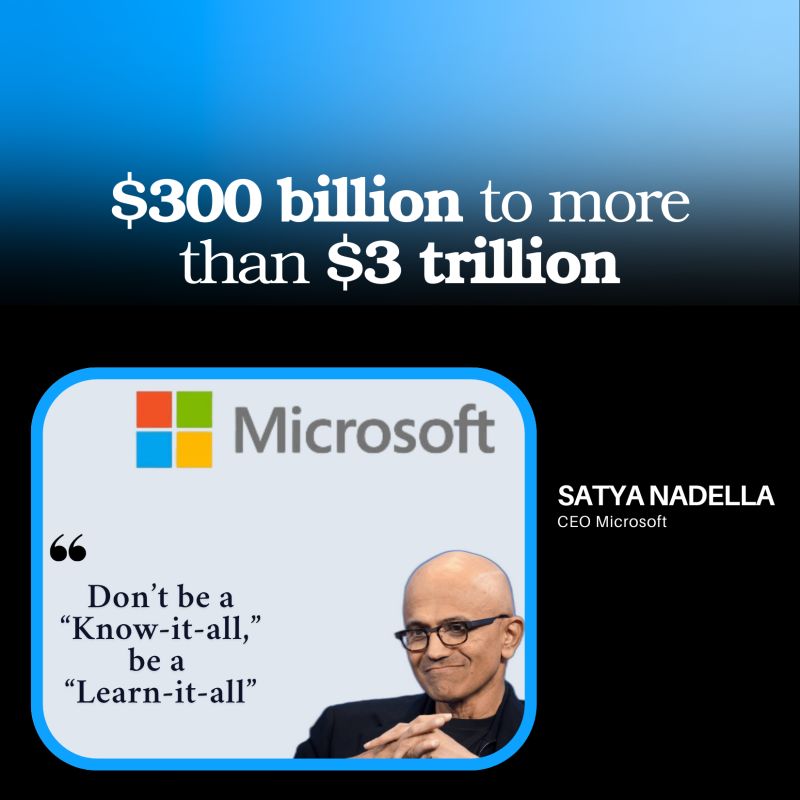
One of the defining ideas behind Microsoft’s cultural evolution was encouraging employees to adopt a learning mindset.
Instead of rewarding individuals for appearing to have all the answers, the organization increasingly valued curiosity, openness, and continuous improvement.
This approach encouraged employees to:
- Ask questions
- Learn from mistakes
- Share knowledge
- Seek feedback
- Explore new ideas
Learning became an ongoing process rather than a one-time achievement.
In fast-changing industries, organizations that continue learning are often better prepared to adapt.
Empathy as a Leadership Skill
Empathy became one of the most recognizable themes of Microsoft’s transformation.
Traditionally, empathy was sometimes viewed as a personal quality rather than a business capability.
Today, many organizations recognize that empathy strengthens leadership by helping managers better understand employees, customers, and partners.
Empathetic leadership can improve:
- Communication
- Collaboration
- Employee engagement
- Customer understanding
- Problem-solving
When leaders understand different perspectives, they are often better equipped to make thoughtful decisions and build stronger teams.
Breaking Down Organizational Silos
Innovation rarely happens within isolated teams.
Microsoft worked to encourage greater collaboration across departments by reducing barriers between groups and promoting shared goals.
Cross-functional collaboration offers several benefits:
- Faster innovation
- Better knowledge sharing
- Improved customer experiences
- More efficient problem-solving
Employees were encouraged to contribute beyond their immediate responsibilities and work together toward broader organizational objectives.
This shift reinforced the idea that collective success creates stronger outcomes than isolated achievements.
Empowering Employees to Grow
Employee empowerment became another important element of Microsoft’s evolving workplace culture.
Empowerment means giving employees the resources, trust, and opportunities needed to perform at their best.
Organizations can encourage empowerment by:
- Providing clear goals
- Encouraging ownership
- Supporting professional development
- Allowing thoughtful experimentation
- Recognizing employee contributions
When people feel trusted, they are often more willing to take initiative and explore innovative solutions.
Empowerment strengthens both employee confidence and organizational adaptability.
Technology Supporting Human Potential
As one of the world’s leading technology companies, Microsoft continued developing digital tools that transformed how people work.
However, its internal cultural transformation emphasized an important principle:
Technology should support people—not replace them.
Digital tools became increasingly focused on helping employees:
- Collaborate across locations
- Share information more easily
- Automate repetitive tasks
- Communicate effectively
- Work flexibly
The goal was to remove unnecessary obstacles so employees could spend more time solving problems, serving customers, and creating value.
Technology became an enabler of human potential rather than simply a productivity tool.
Psychological Safety Encourages Innovation
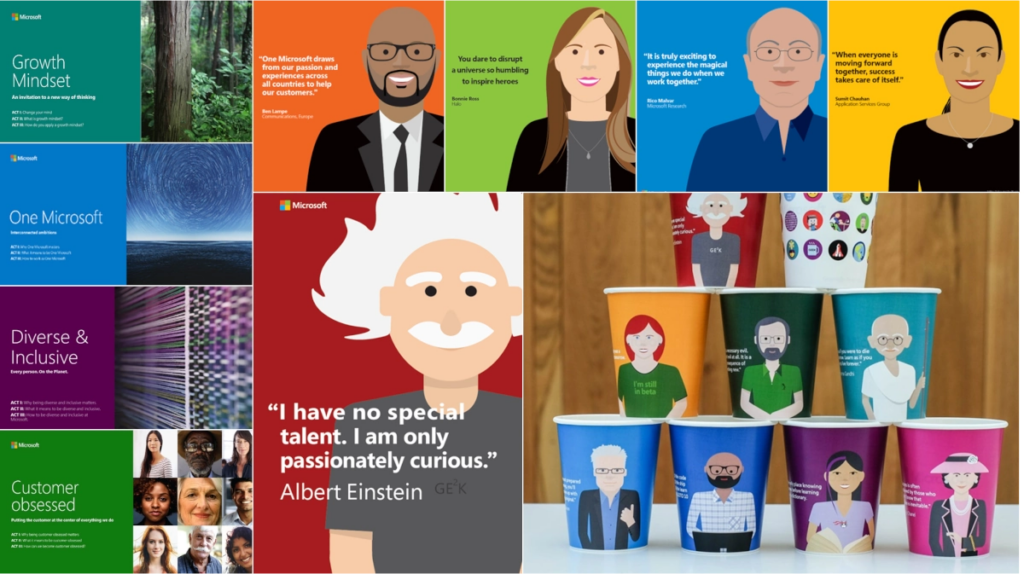
Innovation requires employees to feel comfortable sharing ideas, asking questions, and learning from failure.
Psychological safety became an important aspect of modern workplace culture because it encourages open communication and experimentation.
Organizations that foster psychological safety often experience:
- More creative thinking
- Stronger collaboration
- Faster learning
- Greater employee engagement
Employees are more likely to contribute new ideas when they know thoughtful risks and honest discussions are welcomed.
Creating this environment requires consistent leadership, respectful communication, and trust throughout the organization.
Flexible Work and the Modern Employee Experience
Like many organizations, Microsoft has continued adapting to changing workplace expectations.
Flexible work arrangements have become an important part of the modern employee experience.
These may include:
- Hybrid work models
- Remote collaboration
- Flexible scheduling
- Digital-first communication
Flexibility recognizes that productive work can happen in different environments when employees have the right tools, clear expectations, and supportive leadership.
Rather than measuring success by office attendance alone, organizations increasingly focus on outcomes, collaboration, and impact.
Lessons for Organizations of Every Size
Microsoft’s transformation offers valuable lessons that extend beyond large technology companies.
Businesses of all sizes can strengthen workplace culture by focusing on people as well as performance.
Practical steps include:
Encourage Continuous Learning
Create opportunities for employees to build new skills, share knowledge, and explore fresh ideas.
Organizations that learn continuously are better prepared for change.
Build Trust Through Leadership
Transparent communication, consistent feedback, and thoughtful decision-making strengthen employee confidence.
Trust creates the foundation for effective collaboration.
Prioritize Collaboration
Remove unnecessary barriers between teams and encourage shared problem-solving.
Innovation often emerges when different perspectives come together.
Support Employee Well-Being
Healthy workplaces recognize that sustainable performance depends on balance, flexibility, and psychological safety.
Employees perform best when they feel supported as individuals, not just evaluated on results.
The Future of Work Requires Human-Centered Leadership
As artificial intelligence, automation, and digital transformation continue reshaping industries, organizations face an important challenge.
Technology alone cannot create thriving workplaces.
Businesses also need leaders who can:
- Inspire trust
- Encourage learning
- Build inclusive cultures
- Empower employees
- Support meaningful collaboration
Human-centered leadership will become increasingly valuable as workplaces continue evolving.
Organizations that invest in both technology and people are likely to be better positioned for long-term success.
A Culture That Drives Innovation
Microsoft’s cultural transformation demonstrates that organizational success depends on more than innovative products or advanced technology. Sustainable growth is built on a workplace where employees are encouraged to learn, collaborate, and contribute their best ideas.
By emphasizing empathy, continuous learning, employee empowerment, and trust, the company showed that culture can become a powerful driver of innovation and resilience.
The story is not simply about one organization’s transformation. It reflects a broader shift in the future of work, where leadership is measured not only by business performance but also by the ability to create environments in which people can thrive.
As workplaces continue to evolve, organizations that place people at the center of change will be better equipped to navigate uncertainty, embrace innovation, and build lasting success in an increasingly digital world.