
For generations, the traditional five-day workweek has been considered the standard model for professional life. Employees typically work eight hours a day, five days a week, with success often measured by time spent at work rather than the value created during that time.
However, the way people think about work is changing.
Across the world, businesses are experimenting with a new approach: the four-day workweek. The idea is simple—reduce working hours while maintaining productivity, employee performance, and business results.
This movement is challenging long-standing assumptions about how work should be organized. Instead of asking employees to spend more time working, organizations are exploring how better systems, improved focus, and smarter technology can help teams achieve more in less time.
The four-day workweek is not just about working fewer days. It represents a broader conversation about productivity, workplace well-being, and the future of work.
What Is the Four-Day Workweek?
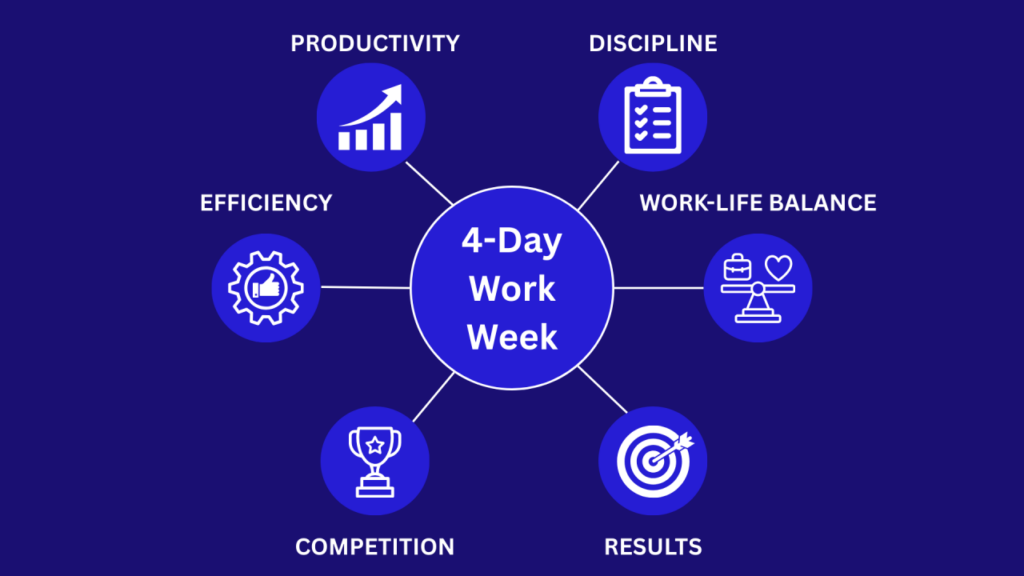
A four-day workweek typically means employees work four days instead of five while receiving the same compensation and maintaining expected performance standards.
However, there are different approaches to implementing this model.
Common versions include:
- Reduced-hour workweeks: Employees work fewer total hours while maintaining the same pay.
- Compressed schedules: Employees complete traditional weekly hours across fewer days.
- Flexible four-day models: Teams choose schedules that fit business needs.
- Trial-based approaches: Companies test shorter workweeks before making permanent changes.
The most discussed model focuses on reducing working hours without reducing productivity.
The goal is not simply to give employees an extra day off. The goal is to redesign work so that time is used more effectively.
Why Businesses Are Exploring Shorter Workweeks
The four-day workweek movement has gained attention because many organizations are questioning whether traditional work structures are still the best approach.
Several factors are driving this shift:
- Rising concerns about employee burnout
- Increased focus on workplace well-being
- Competition for skilled talent
- Advances in automation and technology
- Growing interest in sustainable productivity
Businesses are recognizing that employee time and energy are valuable resources. A workplace that protects those resources may create stronger long-term results.
The Link Between Productivity and Working Hours
For many years, productivity was often connected to the amount of time employees spent working. However, research and workplace experiments have encouraged businesses to reconsider this relationship.
Longer hours do not always lead to better outcomes.
Excessive working time can contribute to:
- Mental fatigue
- Reduced creativity
- Lower concentration
- More mistakes
- Employee disengagement
A shorter workweek encourages organizations to focus on improving how work gets done.
This may involve:
- Reducing unnecessary meetings
- Improving communication systems
- Automating repetitive tasks
- Prioritizing important projects
- Creating clearer workflows
The focus shifts from measuring activity to measuring impact.
Major Four-Day Workweek Trials Around the World

The four-day workweek has been tested through various workplace experiments across different countries and industries.
Large-Scale International Trials
Several organizations have participated in coordinated trials designed to understand whether shorter workweeks can improve business performance.
These experiments typically examine factors such as:
- Employee satisfaction
- Productivity levels
- Revenue performance
- Workplace stress
- Retention rates
Many participating organizations have reported positive experiences, with employees often describing improvements in work-life balance and overall well-being.
Businesses involved in these trials have used different methods, but many share a common approach: redesign work processes before reducing hours.
Company-Led Experiments
Individual companies have also tested shorter workweeks independently.
Organizations experimenting with four-day schedules often focus on:
- More efficient meetings
- Better planning
- Stronger prioritization
- Reduced administrative tasks
- Greater employee autonomy
The results have encouraged some companies to continue with shorter schedules after initial testing.
How Companies Maintain Performance With Fewer Workdays
A shorter workweek does not happen by simply removing one day from the calendar. Businesses must rethink how work is organized.
Successful implementations often include several changes.
1. Reducing Unnecessary Meetings
Meetings can consume significant amounts of employee time.
Companies experimenting with shorter schedules often:
- Shorten meeting durations
- Remove unnecessary meetings
- Create clearer agendas
- Encourage written communication
This allows employees to spend more time on focused work.
2. Improving Workplace Processes
Many businesses discover that traditional work structures contain inefficiencies.
A shorter workweek encourages teams to identify:
- Repetitive tasks
- Slow approval processes
- Communication problems
- Unclear responsibilities
Improving these areas can increase efficiency without increasing pressure.
3. Using Technology More Effectively
Technology plays an important role in making shorter workweeks possible.
Businesses can use technology to:
- Automate routine tasks
- Organize workflows
- Improve collaboration
- Reduce administrative work
The goal is not to make employees work faster under greater pressure. It is to remove unnecessary effort.
The Employee Benefits of a Four-Day Workweek
One of the strongest arguments for shorter workweeks is the potential improvement in employee well-being.
Benefits may include:
- Better work-life balance
- More time for personal responsibilities
- Reduced stress
- Improved mental health
- Higher job satisfaction
Employees who have more time to recover may return to work with greater focus and energy.
This creates a healthier relationship between employees and their work.
Why Well-Being Is Becoming a Business Strategy
The four-day workweek reflects a larger shift toward human-centered workplaces.
Businesses increasingly understand that employee well-being affects important business outcomes.
A healthier workforce can contribute to:
- Lower employee turnover
- Stronger engagement
- Better collaboration
- Improved creativity
- Higher loyalty
Supporting employees is no longer viewed only as a workplace benefit. It is becoming part of a broader strategy for building resilient organizations.
Challenges and Considerations of a Four-Day Workweek
While the four-day workweek has gained attention, it is not automatically the right solution for every business.
Organizations must consider:
Industry Requirements
Some industries require continuous coverage, customer support, or physical presence.
Businesses may need customized approaches rather than a universal schedule.
Customer Expectations
Companies must ensure service quality remains consistent.
This may require:
- Rotating schedules
- Better planning
- Additional support systems
Workload Management
A shorter week should not simply mean compressing five days of work into four stressful days.
Successful implementation requires realistic priorities and improved processes.
How Businesses Can Test a Shorter Workweek
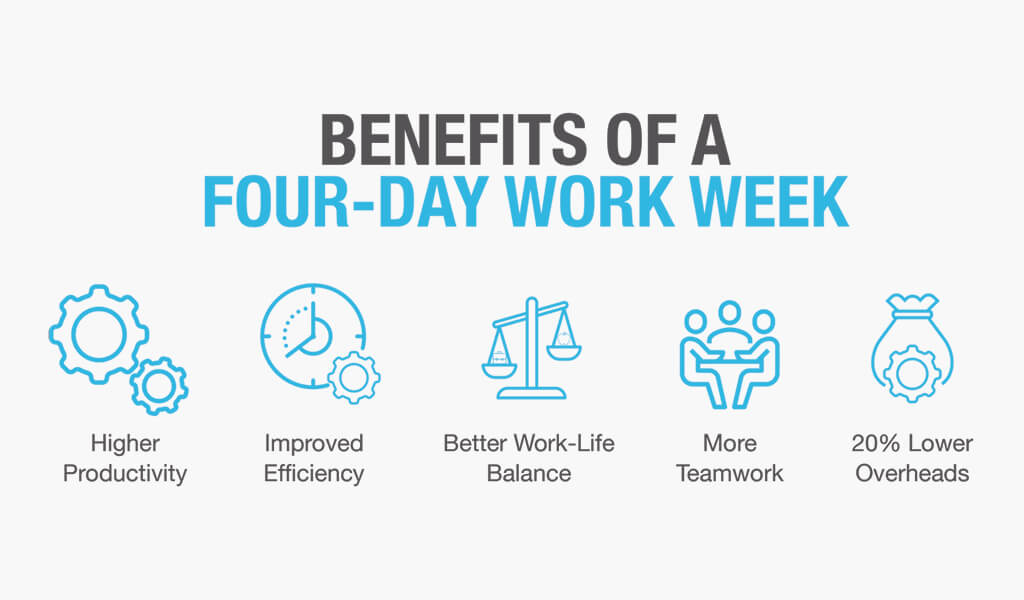
Organizations interested in exploring this model can start with a structured approach.
Step 1: Review Current Work Practices
Identify:
- Time-consuming tasks
- Inefficient processes
- Unnecessary meetings
- Areas where automation can help
Step 2: Define Success Measures
Determine what success looks like.
Possible measurements include:
- Productivity levels
- Customer satisfaction
- Employee engagement
- Business performance
Step 3: Run a Trial Period
A temporary experiment allows businesses to learn what works before making permanent changes.
Step 4: Gather Feedback
Employee and customer feedback can help improve the model.
The Future of Work and the Changing Definition of Productivity
The four-day workweek movement represents a larger transformation in how organizations think about work.
The question is shifting from:
“How many hours are employees working?”
to:
“How effectively are organizations creating value?”
Future workplaces will likely continue exploring new approaches that combine technology, flexibility, and human-centered design.
The goal is not simply fewer working hours. The goal is better work.
Creating a More Sustainable Workplace Model
The four-day workweek is one example of how businesses are rethinking traditional workplace structures. It challenges the assumption that productivity requires longer hours and constant availability.
By improving processes, using technology wisely, and prioritizing employee well-being, organizations can create workplaces where people perform better and businesses remain competitive.
The future of work will not be defined only by where people work or how many days they work. It will be defined by how effectively businesses create environments where productivity, innovation, and human well-being grow together.